Polishing is the classic slow, dusty, hard-to-staff job: pressure comes from the hand, consistency depends on the person, and both rework and consumable cost run out of control. We broke the process into stages — skin pass, rough, fine, satin — and built them into machines with multi-station belt and flap-wheel heads. One unit extends to several linked machines, then to a complete line with robots and conveyors. Dust collection moved from a water-curtain booth to our own dry pulse-jet cabinet: no water, no waste water.
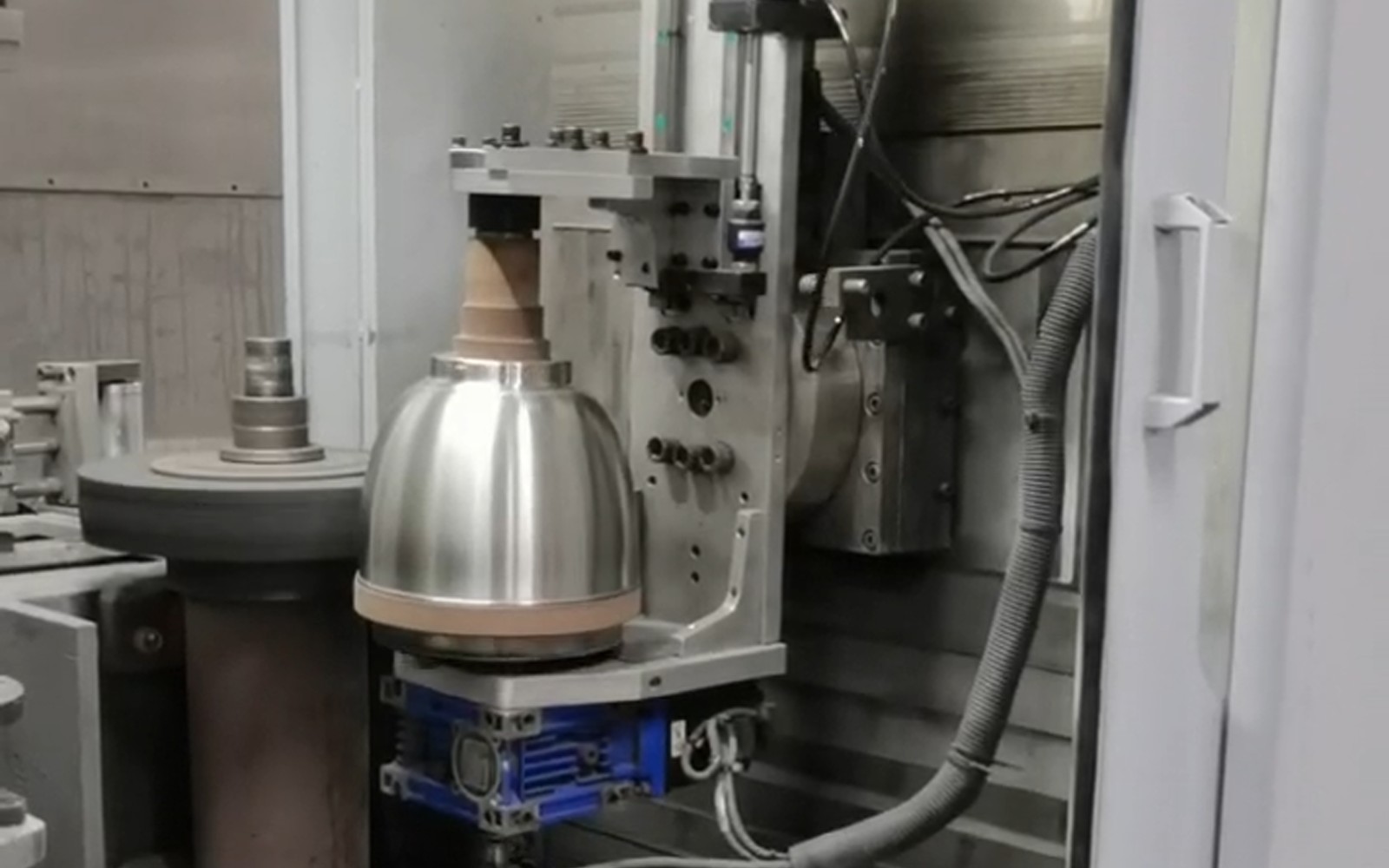 Running on a customer site
WHY AUTOMATED POLISHING
Hand polishing quality depends on the person: change shift, change operator, lose energy, and pressure and dwell time change with it — rework rate and consumable consumption swing with them. The point of automating is not speed. It is that force, time and path are identical every cycle, so craft becomes parameters and a new operator can hold the finish.
| Item | By hand | By machine |
|---|---|---|
| Consistency | Varies by person and shift | Fixed parameters, batch to batch |
| Rework | Depends on individual skill | Stable once first-off is approved |
| Staffing | Dusty, hard to hire, high turnover | One operator tends several machines |
| Consumables | Usage unpredictable | Usage and change interval tracked |
| Scaling up | More people, more management | More machines, more output |
SPEC & CONFIGURATION
Output, cycle time and dimensions depend on your part, so we don't publish estimates. Firm figures are quoted at proposal stage against your actual workpiece.
| Parts | Stainless flasks, kettles, pots, bowls, door handles, mixer shafts |
| Polishing types | Outer / inner / outer base / inner base / brushing / satin / deburring, combined per part |
| Line sequence | Inner skin pass (flap wheel) → inner wall and base (belt) → outer base (belt + non-woven) → outer skin pass (flap wheel) → outer fine polish (flap wheel) → profiled sisal satin → outer fine belt. Cut to your part; grits are not fixed here |
| Machine range | Outer polisher (flap-wheel capable) / eco outer polisher / eco belt polisher / eco inner polisher / eco twin-station satin machine |
| Loading | Manual, or bowl feeder / robot |
| Control | PLC + touchscreen, recipes stored per part |
| Dust collection | Our own dry pulse-jet cabinet (no water, no waste water) or a wet water-curtain booth (fire and explosion safe) |
| Line integration | Linked machines + conveyor + robot, manual or automatic loading; delivered as a turnkey line |
| Output / cycle / footprint | Calibrated to your part and station count; firm figures at proposal stage |
DELIVERY & ACCEPTANCE
01
Part dimensions, target output, existing process and site conditions are agreed before the machine is configured.
02
You test with your own parts and approve cycle time and finished quality before shipment.
03
We install, tune the parameters, and run it until it produces steadily.
04
Operator and maintenance training; long-term technical support, on site when needed.
RELATED EQUIPMENT
FAQ
These are the questions that actually come up on calls and on site. Answers describe how we really work, including what we can't do.
Before counting heads, find out what actually jams this step. If hiring is the problem — you can't recruit or retain — the value of the machine is removing “person” as a variable. If rework is the problem, the fix is process, not headcount. Typically one line runs with one operator inspecting and one handling load, but the real number depends on how many stations and which parts.
Short term yes, long term no. A good polisher does have the touch — but only those few people, and it changes when you change shift or they get tired. A machine won't match that person's best piece, but every piece sits on the same line. If you want to compare, send samples and we'll put roughness and gloss figures on the table instead of adjectives.
We build enclosed machines with internal filtration, the wash water is recirculated, and dust is collected in a box for disposal. But robot loading and dry polishing will still produce dust — that's honest. Dust is captured at the station, air volume sized to the number of stations, outlet connected to your existing extraction main. Inspectors check workplace concentration and the discharge point; we supply the duct drawing and airflow figures you submit. Wet polishing has less dust, but needs slurry circulation and drying, plus floor and water treatment.
First look at where it hurts: can't reach the grade, consumables eat too much, changeover too slow, or people won't stay. The first three can often be fixed — different belt spec, constant-pressure control, new fixtures — without a new machine. Replace only when cycle time and consistency are both stuck. Send me your current parameters and reject rate and I'll tell you if it's worth it.
Driven by station count, which parts you polish, and whether you need robots and extraction. Two quotes for “the same class” of machine can differ by 2x — the money is in stations and automation level, not the brand. Give me part dimensions, required surface and shift output, and I'll quote a range against a proposal.
Belts, cloth wheels, sisal wheels and polishing compound — the big part of long-term cost, well above electricity. How much depends on material and how much stock you remove. We build that number into the selection exercise; comparing machine price alone is misleading.
That's the right way. Send parts, or let us visit and watch how you polish today. Afterwards you get a roughness and gloss comparison plus a sample you can hold and touch — photos and video don't settle polishing.
Automating is turning hand skill into parameters. Tuning them takes some experience, but far less than finding a polisher who can hold a grade. Recipes are stored; recall one for a new part. We train your people.
GET IN TOUCH
Send the product type, part dimensions, target output and your current process. We come back with cycle time and layout thinking first, then a proposal and price range.
Replies within one business day.